How PlayStation Ending Physical Discs in 2028 Affects Gamers
How PlayStation Ending Physical Discs in 2028 Affects Gamers, Collectors and Used Games
PlayStation ending physical disc production in January 2028 sounds like simple industry news at first.
But the real question is not just what did Sony announce?
The real question is:
How does this affect you as a gamer?
If you own a disc PS5, collect physical games, buy second-hand copies, or wait for cheaper physical deals, this change matters a lot more than it first sounds.
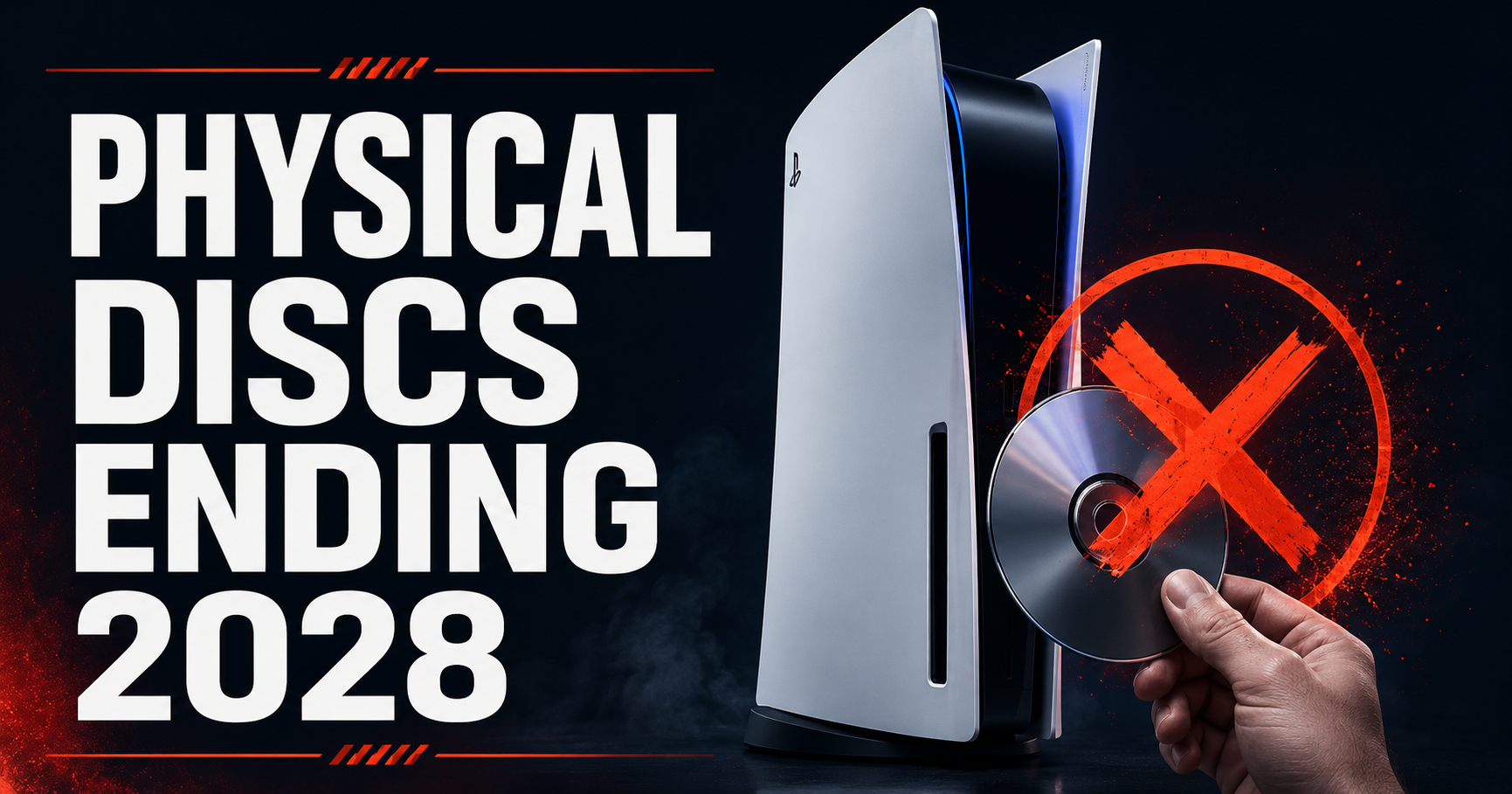
According to the official PlayStation Blog post published on July 1, 2026 by Sid Shuman, Senior Director at Sony Interactive Entertainment, physical disc production for all new games releasing on PlayStation consoles will be discontinued starting January 2028.
After that, new PlayStation games will only be available on the PlayStation Store and through retailers in digital formats.
So yes, this is a major shift.
And for me, this is not just about discs disappearing. This is about ownership, choice, collecting, second-hand gaming, and whether gamers still have real control over the games they pay for.
Quick Answer
Starting January 2028, PlayStation will stop producing physical discs for all new games on PlayStation consoles.
This does not affect PlayStation games that already released on disc, or games that release in disc format before January 2028.
Your current physical PS5 games are not being removed. Your disc PS5 is not suddenly useless.
But for new PlayStation games after January 2028, there will be no new physical disc version. New games will only be sold digitally through the PlayStation Store or through retailers in digital formats.
Key Takeaways
PlayStation is ending physical disc production for all new games starting January 2028.
Existing physical games and pre-2028 disc releases are not affected.
Disc PS5 consoles will still play older physical games, but new post-2028 releases will not have discs.
Collectors may start treating pre-2028 physical PlayStation games as more important over time.
The second-hand market could be hit hard because digital games cannot be resold, traded, or lent like physical copies.
Gamers may feel this more because physical games are often cheaper than PlayStation Store prices.
This is not just about convenience. It is about game ownership.
How Does This Affect Disc PS5 Owners?
If you own a PS5 with a disc drive, your console is still useful.
You can still play the physical games you already own. You can still buy older physical games. You can still use the disc drive for games released before January 2028.
So no, your disc PS5 is not dead.
But after January 2028, the disc drive becomes useful mainly for older PlayStation games and your existing physical collection.
For new PlayStation games released after that date, the disc drive will not matter because there will be no new disc to insert.
That is the part that feels strange.
The PS5 disc edition may end up being remembered as the final major PlayStation console where buying new physical games still mattered.
And if PlayStation 6 comes after this transition, it would not surprise me if Sony pushes even harder toward a digital-only future.
How Does This Affect Physical Game Collectors?
Collectors are probably the group that will feel this the most.
Physical games are not just another way to access a game. For collectors, the box matters. The cover art matters. The disc matters. Limited editions matter. Steelbooks matter. Having something on the shelf matters.
A digital library is convenient, but it does not replace that feeling.
You cannot display a digital game on your shelf. You cannot lend it to someone. You cannot pass it down the same way. You cannot own it in the same physical sense.
Once PlayStation stops producing discs for new games, physical copies released before January 2028 could become more meaningful over time.
The final wave of physical PlayStation releases may become important for collectors, especially if certain games have limited disc runs before the change happens.
So if you are someone who collects PlayStation games, January 2028 now feels like a real deadline.
How Does This Affect the Second-Hand Game Market?
This is where I think the impact becomes even bigger.
The second-hand game market depends on physical copies.
If you buy a disc, you can finish the game and sell it. You can trade it in. You can buy used games cheaper. You can lend a game to a friend. Retailers like EB Games rely heavily on pre-owned games and trade-ins.
Digital games do not work like that.
Once you buy a digital game, you cannot resell it. You cannot trade it in. You cannot hand the copy to someone else. You cannot list it on Facebook Marketplace after finishing it.
That changes the power balance.
With physical games, players have some control after purchase.
With digital games, the platform and publisher have most of the control.
This is why I do not see this as only a disc issue. This affects budget gamers too.
A lot of players do not buy every game at full price. They wait for used copies, trade-ins, physical discounts, or marketplace deals. If new games become digital-only, that whole path starts disappearing for future releases.
How Does This Affect Australian Gamers?
For Australian gamers, this could hurt even more.
In Australia, physical games are often cheaper than digital games, especially after launch.
You can find deals at CEX, EB Games, JB Hi-Fi, Big W, Amazon, Facebook Marketplace, and other retailers. Sometimes physical copies drop in price much faster than the PlayStation Store version.
That matters.
Because PlayStation Store prices can stay high for a long time.
If everything becomes digital-only, Aussie gamers may lose one of the best ways to save money on new games.
Sony says players will still have purchase choices between retailers and the PlayStation Store. But if the retailer is only selling a digital version, that is not the same as having a real physical market.
A digital code from a retailer does not replace a second-hand disc.
It does not create trade-in value.
It does not let you sell the game after finishing it.
So for Australia, this is not just about convenience. It could affect pricing and buying options in a real way.
How Does This Affect Game Ownership?
This is the main issue for me.
Digital games are convenient. I buy digital games too. Most players do.
But with digital, ownership feels different.
When you buy a physical game, you own that copy. Even with modern updates, patches, installs, and online features, the disc still gives you something physical.
You can hold it.
You can sell it.
You can lend it.
You can collect it.
With digital games, you are buying access through an account. That access usually works fine, but it depends on the platform, licensing, servers, storefront rules, and your account staying in good standing.
I am not saying your digital library will suddenly disappear.
But gamers are not wrong to worry about the future.
Games can be delisted. Licenses can expire. Servers can shut down. Storefronts can change. Content can be removed.
Physical games are not perfect either, especially now that many games need downloads and patches. But physical still gives players one extra layer of control.
And losing that layer matters.
Is This the End of Physical PlayStation Games?
For new PlayStation releases after January 2028, yes, this looks like the end of physical discs.
But physical PlayStation games will not vanish overnight.
Older discs will still exist. Collectors will still collect. Used games will still be sold. Disc PS5 owners will still have a reason to keep their consoles.
But the direction is clear.
New PlayStation games are moving into a digital-only future.
And once that happens, the physical side of PlayStation gaming becomes more about history, collecting, and older releases rather than new games.
That is a big emotional shift for anyone who grew up buying games from store shelves.
Should You Still Buy Physical PlayStation Games Before 2028?
If you care about ownership, collecting, resale value, or saving money, then yes, physical games still make sense before 2028.
I would not panic buy every PlayStation disc.
But if there are games you genuinely care about, games you want to keep, or special editions you want in your collection, physical copies may become more meaningful as we get closer to January 2028.
This is especially true for single-player games, limited editions, complete editions, and games that may not always stay easily available digitally.
For me, this news makes physical games feel more important, not less.
Because now there is a visible end point.
My Honest Take
I understand why Sony is doing this.
Digital is popular. It is convenient. It reduces manufacturing and shipping costs. It fits how many players already buy games today.
From a business perspective, it makes sense.
But from a gamer’s perspective, I do not love it.
Because every time gaming moves further away from physical ownership, players lose a little more control.
No resale.
No trade-ins.
No lending.
No second-hand savings.
No new physical collection going forward.
No real shelf full of future PlayStation releases.
This is not just PlayStation changing how games are sold.
This is PlayStation changing what game ownership feels like.
And judging by the more than 6000 of comments on the official PlayStation Blog, a lot of players clearly feel the same way.
Final Verdict
PlayStation ending physical discs in January 2028 is not just a small retail change.
It affects disc PS5 owners, collectors, used game buyers, budget gamers, and anyone who still cares about owning games physically.
For players who already buy everything digitally, this may feel normal.
But for anyone who values physical copies, second-hand deals, game collecting, or having more control after buying a game, this is a major shift.
Physical PlayStation games are not dead today.
But for new PlayStation releases, the end is now officially on the calendar.